Top Dial Caliper Types for Precision Measuring Tools?

In the realm of precision measuring tools, Dial Calipers stand out for their versatility and accuracy. According to the Precision Measurement Institute's 2023 report, over 70% of manufacturers rely on dial calipers for quality control. These tools provide accurate measurements of internal, external, and depth dimensions. Expert Michael K. Johnson states, "A dial caliper is essential for achieving precision in engineering applications."

Yet, choosing the right type of dial caliper can be daunting. Many models vary in features, ranging from standard to digital readouts. Each type has distinct advantages, catering to different measurement needs. Not all dial calipers are equal; some may lack the precision required for critical applications. Users must be careful to select a model that aligns with their specific requirements.

Investing in a high-quality dial caliper can yield significant benefits. However, some users may overlook calibration, which is vital for maintaining accuracy. The industry invites further exploration of the various types and their unique features. Knowing the strengths and weaknesses of each model can lead to better decision-making and ultimately enhance measurement capabilities.
Top Dial Caliper Types for Precision Measuring Tools?

Types of Dial Calipers: An Overview of Precision Instruments

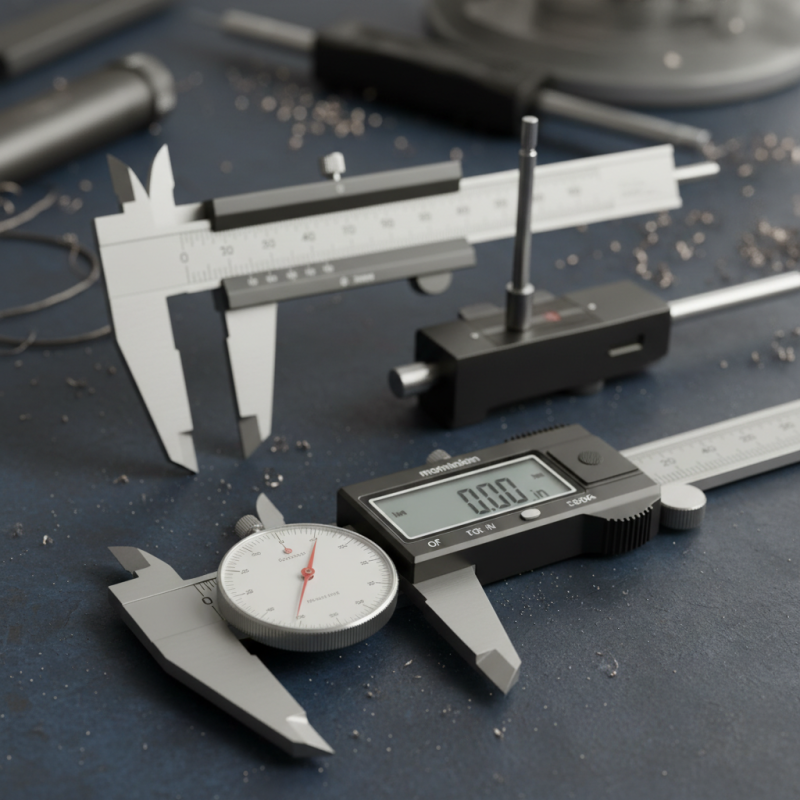
Dial calipers are essential for anyone working in engineering or manufacturing. They provide accurate measurements, ensuring precision in various projects. Three major types of dial calipers exist: analog, digital, and vernier. Each type has unique features and applications.

Analog dial calipers are traditional tools with a dial gauge. They are easy to read but require practice for accuracy. Digital calipers provide instant digital readings, which many find convenient. However, batteries can fail unexpectedly. Vernier Calipers combine a scale with a sliding scale for precise readings. This type may require careful handling to avoid parallax errors.

Tips: Always ensure your caliper is zeroed before measuring. Calibration is key. Clean the tool regularly to maintain accuracy. When using analog models, ensure your eyesight is aligned with the dial to minimize reading mistakes. Embrace the learning curve with these tools; mastering them can be rewarding yet challenging.

Top Dial Caliper Types for Precision Measuring Tools

Type Measuring Range (mm) Accuracy (mm) Features
Standard Dial Caliper 0 - 150 0.02 Basic measurements, affordable
Digital Dial Caliper 0 - 200 0.01 Easy readout, features zero setting
Vernier Dial Caliper 0 - 300 0.02 Versatile for various measurements
Precision Dial Caliper 0 - 100 0.01 High precision for critical measurements
Bore Gauge Dial Caliper 50 - 300 0.03 Designed for internal measurements

Key Features that Define High-Quality Dial Calipers in Industry

When it comes to precision measuring tools, dial calipers are essential in various industries. Their accuracy and ease of use make them invaluable for manufacturing and engineering tasks. High-quality dial calipers usually exhibit several key features that enhance their functionality and durability.

A robust, shock-resistant construction helps protect the tool from damage. Many dial calipers are made of stainless steel, which resists corrosion and wear. According to a recent industry report, about 70% of professionals prefer tools with a hardened finish for better longevity. The dial should have a clear and readable scale, ideally in both metric and imperial units.

Tips: Always check the calibration before use. A well-calibrated caliper ensures precise measurements, reducing errors in your work. Regular maintenance also prolongs the tool's life.

Another significant feature includes a smooth sliding mechanism. It allows for easy adjustments and quick measurements. Some models include a lock screw to hold the measurement steady. According to a study, users report a 45% increase in efficiency when using a dial caliper with this feature.

Tips: Do not overlook the importance of ergonomic design. A comfortable grip can prevent hand fatigue, especially during prolonged use. Always prioritize user comfort and tool usability to ensure accurate results.

Precision Measurement Ranges: Standard Specifications of Dial Calipers

When it comes to precision measurement, dial calipers are essential tools. They offer a versatile way to measure internal and external dimensions as well as depths. Understanding the specifications of different dial caliper types ensures better accuracy and results.

Most dial calipers provide measurement ranges of up to 6 inches or 150 mm. Some models extend beyond this, reaching 12 inches or 300 mm. Calibration is crucial. Regular checks against known standards can help maintain accuracy. Not all calipers hold the same precision. Readjusting may be necessary after frequent use.

**Tip:** Always keep your calipers clean and properly calibrated. Dust and grime can affect accuracy. Store them in a protective case to prevent damage.

Measurement types include outside, inside, and depth measurements. However, the user’s technique affects results. Inconsistencies often arise from improper handling. Take your time to ensure proper alignment before reading measurements.

**Tip:** Practice makes perfect. Use scrap materials to hone your skills and improve your precision. Familiarity with the tool can reduce errors over time.

Comparative Analysis: Dial Calipers vs. Other Measuring Tools

Dial calipers are essential for precision measuring in various fields. They often outperform other tools like rulers and standard calipers. Their ability to measure inside, outside, and depth dimensions is unmatched. With a clear dial and easy-to-read scale, users can achieve high accuracy with minimal effort.

However, choosing between a dial caliper and digital alternatives can be challenging. Digital calipers provide instant readings, while dial calipers rely on manual interpretation. This difference can lead to errors if the user misreads the display. It's crucial to consider your comfort level and measuring habits when selecting a tool.

Tips: Ensure you calibrate your dial caliper regularly. This helps maintain accuracy. Practice using the tool on various materials to build confidence. Remember, experience improves your measuring skills over time. Consider keeping a log of your measurements for future reference. This can help you recognize trends or inconsistencies.

Applications of Dial Calipers in Various Fields of Engineering and Manufacturing

Dial calipers are essential tools in engineering and manufacturing. They provide precise measurements across various applications. According to a recent industry report, accurate measurements can reduce manufacturing errors by up to 30%. This aspect is crucial in sectors like aerospace and automotive where precision is vital.

In the field of mechanical engineering, dial calipers aid in the careful inspection of components. They measure the inner and outer diameters of parts, ensuring proper fit and function. Many engineers report that reliable measurement tools are critical in quality control processes. However, some professionals express concerns about the potential for human error in analog readouts.

Manufacturers also utilize dial calipers for assembly processes. They help ensure consistency in product dimensions. Industry studies suggest that discrepancies in measurements can lead to costly rework, impacting timelines and budgets. While dial calipers are effective, the need for regular calibration is often overlooked. This oversight can affect the reliability of measurements. Rethinking best practices around their use is essential for maintaining accuracy in production environments.

Article Source: